In a nutshell, the best finish nailers under $150 offer great value, combining performance for DIY projects with affordability. Look for reliable brands known for durability and user-friendliness to tackle trim, molding, and light framing with confidence without breaking the bank.
Hey there, DIY pals! Jack over at Nailerguy here. Ever stare at a piece of trim, a crown molding project, or a simple DIY build and think, “I wish I had a quicker, cleaner way to fasten this?” You’re not alone! That’s where a good finish nailer comes in. But with so many options out there, finding the right one, especially on a budget, can feel like a puzzle. Don’t worry, though! We’re going to cut through the noise and find you a fantastic finish nailer for under $150. This guide will help you pick the perfect tool to make your projects shine, safely and easily.
Table of Contents
Why a Finish Nailer is Your New Best Friend

A finish nailer is a woodworking superhero for small jobs. Unlike framing nailers that pound thick nails for structural work, finish nailers use slimmer nails (usually 15-gauge or 16-gauge) that leave smaller holes. This means less filling, less sanding, and a much cleaner final look. They’re perfect for attaching baseboards, window casings, door frames, decorative trim, and even light cabinet assembly. Think of all those little details that make a big difference – that’s where a trusty finish nailer excels.
Using a finish nailer can dramatically speed up your projects. Imagine being able to attach a long piece of trim in seconds, instead of carefully hammering each nail by hand. It’s a game-changer not just for speed, but for accuracy too. Plus, they save your hands from the repetitive strain of hammering. For DIYers, it’s one of those tools that truly elevates your capabilities and makes professional-looking results achievable.
What to Look for in a Finish Nailer Under $150

When you’re shopping for a finish nailer that won’t cost a fortune, you still want a tool that’s reliable and safe. Here’s what to keep an eye on:
Power Source: Pneumatic vs. Battery
The biggest decision you’ll make is how your nailer is powered. Both have their pros and cons:
- Pneumatic (Air-Powered): These are the classic workhorses. They require an air compressor and a hose.
- Pros: Generally more powerful, lighter in hand (the tool itself), more durable, and often more affordable to purchase upfront. Great for extended use.
- Cons: Requires an air compressor, which adds to the overall cost and setup time. The hose can be a bit cumbersome to manage.
- Cordless Battery-Powered: These are super convenient as they don’t need a hose or compressor.
- Pros: Ultimate portability and ease of use. No hoses to untangle or compressors to lug around. Great for quick jobs or working in tight spaces.
- Cons: The tool itself is often heavier due to the battery. Batteries can be expensive to replace, and they might have slightly less driving power than pneumatic models. Battery life can be a factor on large projects.
Nail Gauge: 15-Gauge vs. 16-Gauge
This refers to the thickness of the nail the gun uses. It’s a crucial factor for the type of finish you’ll get.
- 15-Gauge (3.0mm diameter): Referred to as “DP” nails (Double-Proof) or “cosmopolitan” nails. These are slightly thicker.
- Pros: Offer a bit more holding power and leave a slightly larger hole, which is less likely to split softer woods. Excellent for heavier trim or baseboards.
- Cons: The hole is more noticeable and will likely require filling.
- 16-Gauge (2.5mm diameter): Known as “DA” nails (Double-Action) or “f” nails. These are thinner and create a minimal-sized hole.
- Pros: Leave a very small, almost invisible hole. Ideal for delicate trim, crown molding, or any application where a pristine finish is paramount.
- Cons: Offer slightly less holding power than 15-gauge. Can occasionally split very brittle wood.
For most general DIY trim work, a 16-gauge finish nailer is a fantastic choice because of the minimal marring. If you’re working with heavier trim or want that extra bit of holding power, a 15-gauge is a solid option.
Features to Consider
- Depth Adjustment: This is essential! It lets you control how deep the nail sinks into the wood. You want to be able to countersink the nail head slightly below the surface for easy filling, but not drive it so deep that it breaks through the wood or becomes impossible to fill. Look for tool-free depth adjustment if possible.
- Jam Release: Nobody wants to stop a project to wrestle with a jammed nail. A simple, tool-free jam release mechanism is a huge time-saver and frustration-reducer.
- No-Mar Tip: A rubber or plastic tip on the nose of the nailer prevents accidental dents or scratches on your workpiece, especially important when working with finished surfaces.
- Selectable Trigger: This feature allows you to switch between single-shot (sequential) firing and bump firing. Single-shot is for precision, while bump firing lets you rapid-fire nails for speed. Always practice with sequential firing first for safety!
- Weight and Ergonomics: You’ll be holding this tool, so ensure it feels comfortable in your hand. Lighter tools are easier to maneuver, especially overhead or for long periods.
Top Finish Nailer Picks Under $150 (Based on Typical Market Pricing)

Finding a brand-new, high-quality finish nailer under $150 often means looking at reliable tool manufacturers known for their value. Keep in mind that prices can fluctuate, especially with sales!
Pneumatic Options (Tool Only)
These prices typically reflect the tool itself. Remember to factor in the cost of an air compressor if you don’t already have one.
| Nailer Model | Gauge | Magazine Capacity | Key Features | Price Range (Approx.) |
|---|---|---|---|---|
| PORTER-CABLE PCFP12234 | 16-Gauge, 18-Gauge | 100 Nails | Selectable trigger, tool-free depth/jam release, no-mar tip. Great all-around value. | $100 – $130 |
| DEWALT DWFP71621 | 16-Gauge | 100 Nails | Tool-free depth adjustment, tool-free jam release, LED lights, straight magazine. Known for durability. | $120 – $150 |
| Hitachi NT50AE2 (Now Hikoki) | 16-Gauge | 100 Nails | Lightweight, comfortable grip, tool-free depth adjustment, no-mar nose. A long-time favorite for a reason. | $100 – $120 |
| BOSTITCH HP18BN (18 Ga. Brad Nailer) | 18-Gauge | 100 Nails | Very lightweight, tool-free depth adjustment, rear exhaust. Excellent for ultra-fine trim. Note: This is an 18-gauge brad nailer, often used for similar delicate trim tasks as a 16-gauge finish nailer. | $90 – $110 |
Note: Prices are estimates and can vary based on retailer, sales, and promotions. Always check current pricing.
Cordless Battery Options (Tool Only)
Cordless options in this price range are less common for full finish nailers, but sometimes you can find great deals, especially during holiday sales. Often, they might be 18-gauge brad nailers that serve a similar purpose for lighter trim.
- RYOBI ONE+ HP 18V Brushless Cordless 16-Gauge Nailer: While sometimes pushing the $150 mark for just the tool, Ryobi often has sales that bring it within reach. It’s a fantastic option for portability and convenience. Its brushless motor offers more power and longer runtime.
- Certain 18-Gauge Cordless Options: You might find entry-level 18-gauge cordless brad nailers from various brands (like certain SKIL or even past Craftsman models) within this budget. These excel at very delicate trim work where minimal impact is key.
A Word on Air Compressors: If you’re going the pneumatic route, you’ll need an air compressor. Small, pancake-style compressors suitable for finish nailers can often be found for $100-$150, sometimes in kits with a nailer. Be sure to check out reviews for those too!
Getting Started: Your First Projects
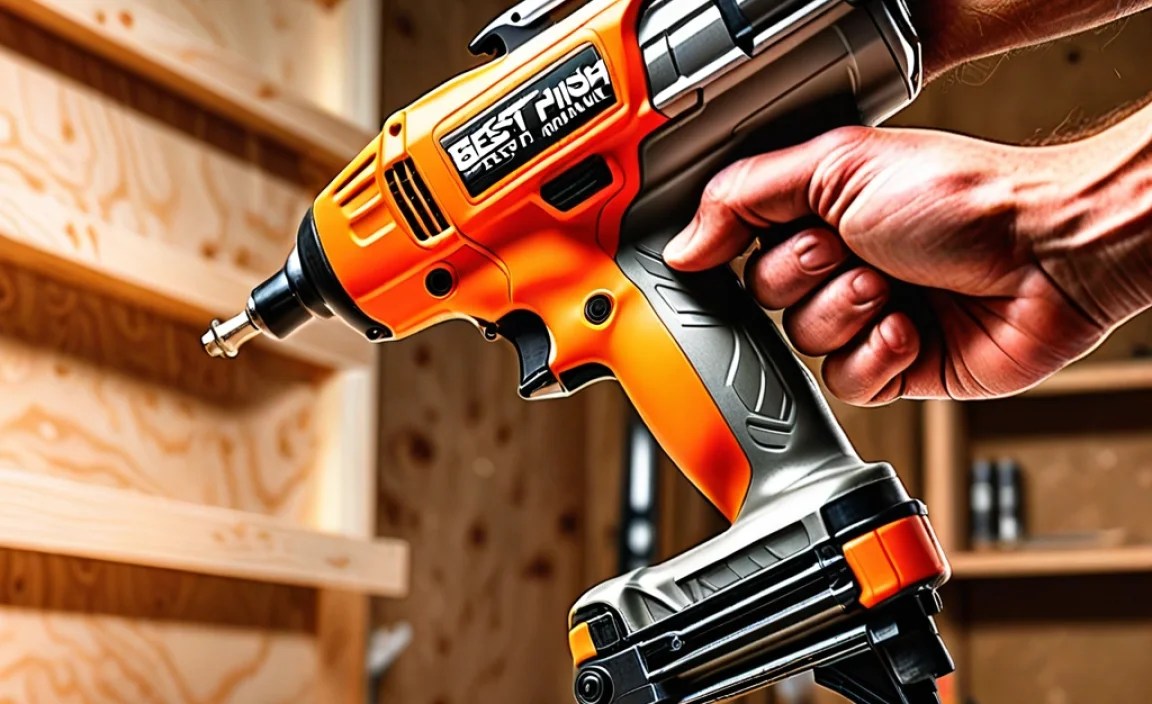
Once you’ve picked out your new finish nailer, it’s time to put it to work! Here are some classic beginner-friendly projects:
Project 1: Installing Baseboards
This is a fantastic project to get comfortable with your finish nailer. Baseboards instantly add a polished look to any room.
- Measure and Cut: Measure your walls and cut your baseboard molding to size, always making a 45-degree miter cut for inside and outside corners. A good chop saw or miter saw makes this much easier.
- Position the Board: Hold the baseboard in place against the wall. For better accuracy, you can use wood shims to temporarily hold it at the correct height while you nail.
- Nail it Down: Using your finish nailer, drive 16-gauge nails (or 15-gauge for wider boards) through the baseboard into the wall studs. Aim for studs whenever possible for a secure hold. If you can’t hit a stud, angle your nails slightly into the drywall anchors for some support. Space nails about 16-24 inches apart.
- Countersink Nails: Use the depth adjustment on your nailer to sink the nail heads just slightly below the surface of the wood.
- Fill and Finish: Once all boards are up, fill the nail holes with wood putty or filler. Let it dry, then sand smooth. Apply paint or stain to match your room.
For tackling corners, check out resources like This Old House’s guide to cutting molding for excellent visual tips.
Project 2: Adding Picture Frame Molding
This technique adds architectural detail to plain walls and is simpler than it looks! It involves creating rectangular grids on your wall using smaller trim pieces.
- Plan Your Grid: Measure your wall space and plan out the size and placement of your rectangular frames. Use painter’s tape to mark out the design on the wall.
- Cut Your Trim: Cut lengths of trim (often 1×2 or similar, or even decorative molding) to form the sides of your rectangles. Use mitered cuts for the corners.
- Attach the First Pieces: Hold your first piece of trim against the wall, aligned with your painter’s tape outline. Use your finish nailer (16-gauge is usually perfect here) to attach it. Nail into the wall studs if you can, especially for longer pieces. If studs aren’t conveniently located, stronger adhesive, like construction adhesive applied to the back of the trim, used in conjunction with a few nails, will make it very secure.
- Complete the Grid: Continue cutting and attaching the remaining pieces of trim to form your box or grid pattern.
- Fill and Finish: As with baseboards, fill all nail holes with wood putty, sand smooth after drying, and paint the trim to match your wall color or a contrasting color.
For inspiration and detailed steps, sites like Family Handyman offer great visual guides.
Safety First! Always
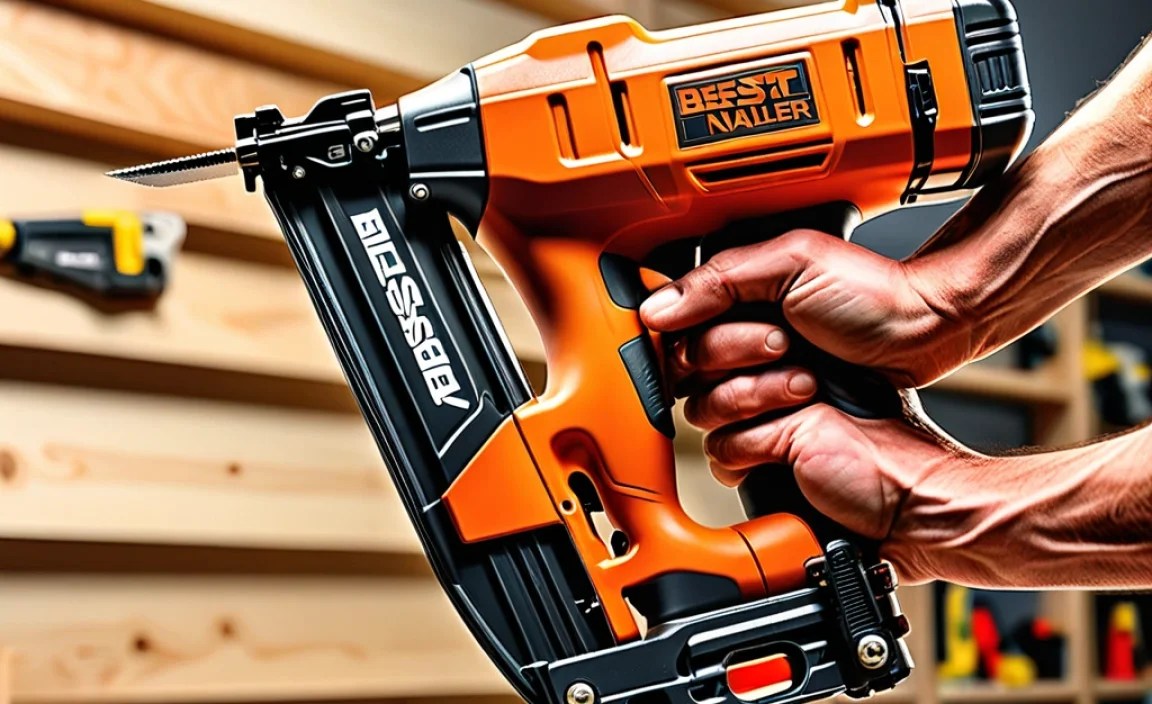
Nail guns are powerful tools, and safety should always be your top priority. Treat your finish nailer with respect, and you’ll have many successful projects.
- Read the Manual: Seriously, take a few minutes to read your tool’s instruction manual. It’s full of important safety tips specific to your nailer.
- Wear Safety Glasses: Always wear ANSI-approved safety glasses or goggles. No exceptions!
- Never Point at Yourself or Others: Treat it like a real firearm. Keep the safety on and the nose pointed away from any person.
- Keep Fingers Away From the Trigger and Nose: Only place your finger on the trigger when you are ready to fire. Do not “ride” the trigger.
- Disconnect Power When Not in Use: For pneumatic nailers, disconnect the air hose. For battery-powered nailers, remove the battery when changing nails, clearing jams, or in between tasks.
- Be Mindful of “Bump Fire” Mode: If your nailer has a selectable trigger, ensure it’s set to sequential firing until you are very comfortable and its purpose is to speed up work on a specific task. Accidental firing is a real risk in bump fire mode.
- Check for Hidden Wires/Pipes: Especially for larger projects, be aware of what might be behind the surface you’re nailing into. Resources like HUD’s Healthy Homes initiative offer general awareness on home utility safety.
FAQ: Your Finish Nailer Questions Answered
Here are some common questions beginners have about finish nailers:
Q1: Do I need an air compressor for a finish nailer?
A: If you choose a pneumatic (air-powered) finish nailer, then yes, you absolutely need an air compressor and an air hose. Battery-powered finish nailers do not require an air compressor, offering more portability.
Q2: 15-gauge or 16-gauge? Which one is better for trim?
A: For most interior trim, like baseboards, window casings, and crown molding, a 16-gauge finish nailer is excellent because it leaves a very small hole you can easily fill. A 15-gauge is slightly thicker and offers a bit more holding power, which can be beneficial for heavier trim or if you’re concerned about splitting softer woods. For sheer versatility for typical DIY trim, 16-gauge is often the go-to.
Q3: What is a “brad nailer” and how is it different from a finish nailer?
A: A finish nailer typically uses 15-gauge or 16-gauge nails. A brad nailer uses even thinner 18-gauge nails. Brad nailers leave the smallest holes and are fantastic for very delicate trim, molding, or assembling small projects where appearance is critical. Finish nailers offer a bit more holding power. Sometimes, a 16-gauge finish nailer and an 18-gauge brad nailer can overlap in functionality for lighter trim tasks.
Q4: How deep should I set my finish nailer?
A: You want the nail head to be recessed just slightly below the surface of the wood. This allows you to fill the hole easily with wood putty or filler without the head sticking out or tearing the wood. Most nailers have adjustable depth settings, and it often takes a little practice on scrap wood to find the perfect depth for your material.
Q5: What is the fastest way to clear a nail jam?
A: First, ALWAYS disconnect the power source (air hose or battery). Most finish nailers have a tool-free jam release lever or door on the nose. Open this access point, carefully remove any bent or jammed nails with pliers if necessary, then close the access point and reconnect the power. Refer to your tool’s manual for specific instructions.
Q6: Can I use my finish nailer for framing?
A: No, you should not use a finish nailer for framing. Framing nailers use much larger, thicker nails designed for structural integrity. Finish nailers, using slimmer nails, are not designed for the forces involved in framing walls or roofs
