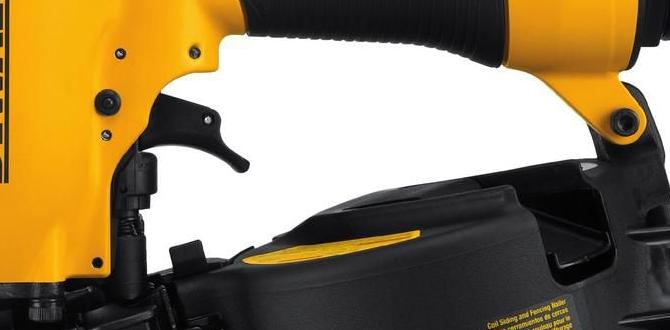
For installing baseboards like a pro, a cordless nail gun is your best bet. Look for a model that’s lightweight, has adjustable depth settings, and offers consistent power for a clean finish every time. A good tool makes a big difference!
Hey there, fellow DIYers! Jack Shaffer, your trusty Nailerguy, here. So, you’re ready to tackle those baseboards? Fantastic! It’s a project that can totally transform a room’s look. But let’s be honest, getting that perfect finish can feel a bit daunting, especially when you’re thinking about hammers and tiny nails. Don’t worry, though! We’re going to find you the best cordless nail gun for baseboards to make this job not just manageable, but actually enjoyable. Get ready to learn what makes a cordless nailer your new best friend for trim work!
Table of Contents
Why a Cordless Nail Gun is a Game-Changer for Baseboards
Let’s talk about why ditching the hammer is a smart move for baseboard installation. Traditional methods can be slow, noisy, and let’s face it, hitting your thumb is never fun! A cordless nail gun offers a huge upgrade in speed, precision, and convenience.
The Freedom of Cordless
The biggest win? No cords to trip over or wrangle. This is especially helpful when you’re working around furniture or in tight corners. Plus, no air compressor means less noise and less setup time. You can just grab your tool and go! This freedom makes even a big job feel much simpler.
Precision and Power
Modern cordless nail guns pack a serious punch. They can drive nails cleanly and consistently, ensuring your baseboards are secure and look professionally installed. No more bent nails or partially sunk fasteners. The adjustable depth settings are also a lifesaver, letting you sink nails just right, whether you’re working with soft pine or a harder wood.
Efficiency for Big Projects
Installing baseboards for an entire house can seem like a marathon. A cordless nail gun turns it into a sprint. You’ll be able to put up trim much faster, saving you time and energy for other parts of your project. This efficiency boost is invaluable for any DIYer.
—
Choosing Your Ideal Cordless Nail Gun for Baseboards
Not all cordless nail guns are created equal, especially when it comes to baseboards. We’re looking for specific features that make this particular job a breeze. Think of it like picking the right drill bit for the job – you need the right tool to get the best results.
Nail Gauge: The Sweet Spot
For baseboards, you’ll generally want a 16-gauge finish nailer. Why 16-gauge?
These nails are thin enough to leave a small, easily concealable hole, making for a clean finish. They’re also strong enough to hold baseboards securely against the wall. Thicker gauges, like 15-gauge, are great for heavier trim but might leave a hole that’s a bit too noticeable on standard baseboards. 18-gauge nails are even finer, often too weak for baseboards and better suited for very delicate trim or molding.
Power Source: Battery vs. Gas
Cordless nail guns typically run on either battery power or a combination of a battery and a fuel cell.
Battery-Powered (Lithium-ion): This is the most common and generally the easiest to use. You just need to keep your batteries charged. They offer consistent power and are usually lighter than fuel cell models. Brands like DeWalt, Ryobi, Milwaukee, and Metabo HPT are known for their excellent battery-powered options.
Battery + Fuel Cell (Propane/Butane): These tools use a small burst of fuel to help drive the nail, with a battery to power the fan and electronics. They can be very powerful and are sometimes a bit more compact. However, you have the added cost and hassle of buying fuel cells, and they can sometimes emit a faint odor. For most DIYers tackling baseboards, a pure battery-powered model is the way to go.
Key Features to Look For:
When you’re comparing models, keep these features in mind:
Adjustable Depth Control: Absolutely essential! This lets you set how deep the nail drives into the wood. You want to sink it just below the surface so you can easily fill the hole with putty.
Nail Jam Clearing: Jams happen, but a good nail gun makes clearing them quick and tool-free. This saves you precious time and frustration.
Ergonomics and Weight: You’ll be holding this tool for extended periods. A comfortable grip and manageable weight are crucial to prevent fatigue.
Rafter Hook (or Belt Clip): Handy for temporarily hanging the nailer on your belt or a stud while you’re repositioning or grabbing more nails.
Sequential vs. Contact Actuation:
Sequential: You must “bump” the nose of the gun against the wood and then pull the trigger to fire a nail. This is safer and more precise.
Contact: You hold the trigger down and bump the nose to fire nails rapidly. Great for speed, but can lead to accidental firing if not careful. For baseboards, precision is key, so sequential firing is often preferred. Many guns offer a switch to toggle between these modes.
Battery Platform: If you already own tools from a particular brand (like DeWalt, Milwaukee, or Ryobi), consider getting a nailer that uses the same battery system. This can save you money on batteries and chargers.
—
Top Cordless Nail Guns for Baseboards (2024)
Finding the “best” can be subjective, as it depends on your budget and specific needs. However, based on user reviews, professional recommendations, and performance for trim work, here are a few excellent cordless nail guns that consistently perform well for baseboards.
Our Top Picks
| Nail Gun Model | Gauge | Nail Range (Length) | Battery Voltage | Key Features | Best For |
| :————————- | :—- | :—————— | :————– | :—————————————————- | :—————————————————————————— |
| DeWalt DCN662B 20V MAX XR | 16 GA | 1-1/4″ to 2-1/2″ | 20V | Brushless motor, tool-free jam release, LED, belt hook | All-around performance, power, and battery consistency. Excellent for trim. |
| Metabo HPT NT1855DM | 15 GA | 1-3/16″ to 2-3/8″ | 18V | Brushless, counterweight for balance, tool-free depth | Powerful, good for slightly thicker trim too, reliable. |
| Ryobi P325 ONE+ 18V | 16 GA | 3/4″ to 2″ | 18V | Lightweight, LED light, easy jam clearing | Budget-conscious DIYers, great entry-level option for smaller projects. |
| Milwaukee M12 FUEL Gen 2| 16 GA | 3/4″ to 2-1/8″ | 12V | Compact, lightweight, excellent power-to-size, fast fire | Tight spaces, those who prioritize maneuverability and a lighter tool. |
Note: Models often come as “bare tool” (tool only, no battery/charger) or in kits. Always check what’s included.
—
How to Install Baseboards with Your Cordless Nail Gun: A Step-by-Step Guide
Alright, let’s get to the good part! Here’s how to use your new cordless nail gun to install baseboards like a pro finisher. Safety first, always!
Step 1: Gather Your Tools and Materials
Before you start, make sure you have everything ready. This makes the process smooth and efficient.
Cordless 16-Gauge Finish Nailer: (Your awesome new tool!)
Compatible Nails: Check your nailer’s manual for the correct size and type of finish nails you’ll need. For baseboards, common lengths range from 1-1/2 inches to 2 inches, depending on the thickness of your baseboard and whether you are nailing into studs or drywall anchors.
Baseboard Material: Measure your walls carefully and buy a little extra.
Measuring Tape & Pencil: For accurate measurements and marking.
Miter Saw or Hand Saw: For cutting baseboard angles (especially for corners).
Safety Glasses: Non-negotiable! Wood chips and nail fragments are no joke.
Work Gloves: Optional, but can help with grip and prevent splinters.
Stud Finder: Crucial for locating wall studs to ensure secure attachment.
Wood Filler or Nail Set: For covering nail holes.
Caulk: For filling small gaps between the baseboard and the wall/floor.
Optional: Small Pry Bar: Useful for making minor adjustments.
Step 2: Prepare the Area and Baseboards
1. Clear the Space: Remove any furniture or obstacles from the walls where you’ll be working.
2. Clean the Walls: Make sure the wall surface is clean and free of dust or debris.
3. Measure and Cut Corners: Measure the wall length for each section. For inside and outside corners, you’ll need to cut your baseboards at a 45-degree angle using a miter saw so they meet perfectly. A good resource for understanding corner cuts is This Old House’s guide to cutting corners.
4. Dry Fit: Before nailing, hold the cut piece of baseboard against the wall to check the fit. Make any necessary adjustments.
Step 3: Locate Wall Studs
This is critical for a secure installation. Baseboards need to be nailed into the wall studs for maximum stability.
1. Use a Stud Finder: Run your stud finder horizontally along the wall at the height where the center of your baseboard will be. Mark the edges of each stud with a light pencil mark. Studs are typically spaced 16 or 24 inches apart.
2. Why Studs Matter: Nailing only into drywall will eventually lead to sagging or detached baseboards. Hitting studs ensures they’re firmly anchored for years to come. For areas where studs aren’t accessible (like over a doorway), you might need to use drywall anchors, but try to get as many nails into studs as possible.
Step 4: Load Your Nail Gun & Set Depth
1. Load Nails: Follow your nail gun’s manual to load the correct 16-gauge finish nails into the magazine. Make sure they are seated properly.
2. Adjust Depth Setting: Set your nail gun’s depth adjustment. Start with a medium setting. You want the nail head to sink just slightly below the surface of the wood, leaving a small divot that can be easily filled. You can test this on a scrap piece of baseboard material.
Step 5: Start Nailing!
1. Position the Nailer: Place the nose of the nail gun firmly against the baseboard and where you want to drive a nail. Ensure the nail magazine is flush against the wall.
2. Secure the Baseboard: Press the baseboard firmly against the wall with one hand.
3. Fire the Nail:
If using sequential mode, press the nose against the baseboard, then pull the trigger.
If using contact mode, hold the trigger down and then gently “bump” the nose against the baseboard.
4. Even Nailing: Drive nails approximately every 16-24 inches, ensuring at least one nail per stud. Prioritize nailing into studs. Also, place nails near the top edge of the baseboard to secure it to the top plate of the wall, and near the bottom edge where it meets the floor.
5. Finishing Touches on Corners: For corners, place nails strategically to hold the mitered sections together securely.
6. Troubleshooting:
Nail not driving fully: Increase the depth setting or ensure you are pressing firmly. Check battery charge.
Nail driving too deep: Decrease the depth setting.
Jamming: Refer to your manual for tool-free jam clearing. This is usually a simple latch or mechanism to open the magazine.
Step 6: Finishing Touches
1. Fill Nail Holes: Once all baseboards are installed, use wood filler or putty to fill all the nail holes. Try to match the color of your baseboard. Let it dry completely.
2. Sand (Optional): Lightly sand any filled areas once the filler is dry to create a smooth surface.
3. Caulk Gaps: Apply a thin bead of paintable caulk along the top edge where the baseboard meets the wall and along the bottom edge where it meets the floor. This hides any small imperfections and creates a clean, finished look.
4. Clean Up: Wipe away any excess caulk before it dries.
—
Understanding Nail Gun Power Sources: Battery vs. Fuel Cells
When you’re looking at cordless nail guns, the power source is one of the most important distinctions. Let’s break down the two main types you’ll encounter.
Battery-Powered (Lithium-Ion)
This is the most popular type for a reason!
These nail guns run entirely on rechargeable lithium-ion battery packs. The battery powers a motor, which in turn drives a pneumatic system internally to fire the nail. Think of it as carrying your own mini air compressor with you.
Pros:
Ease of Use: Simply charge the battery and go. No consumables (like fuel cells) to buy.
Consistent Power: Modern batteries provide reliable power for consistent nail drives.
Less Maintenance: Generally require less upkeep than fuel cell systems.
No Fumes: No fuel smell, which is a big plus for indoor work.
Widely Available: Most major tool brands offer excellent battery-powered nailers.
Cons:
Battery Dependency: If your battery dies, you can’t work until it’s recharged or you have a spare.
Weight: Batteries can add a bit more weight compared to some fuel-cell models, though this is improving rapidly.
Battery + Fuel Cell (Gas-Powered)
These tools use a combination of a battery and a disposable fuel cell (typically propane or butane-based).
When you pull the trigger, the battery ignites the fuel exiting the cell, creating a controlled explosion that drives the piston and nail. The battery also powers the fan and electronics.
Pros:
High Power Output: Can sometimes offer more power, especially for larger framing nailers (less common for finish nailers).
Compact Size: Some models can be smaller and lighter because they don’t need a large internal air reservoir.
Fewer Battery Swaps Needed: The fuel cell does most of the heavy lifting, so the battery’s job is less demanding.
Cons:
Consumables Cost: You need to continuously purchase fuel cells.
Fumes/Odor: Can produce a distinct smell, which might be bothersome indoors.
Temperature Sensitivity: Fuel cells can sometimes perform less reliably in very cold temperatures.
More Complex Maintenance: Involves keeping both batteries charged and fuel cells stocked.
Which is better for baseboards?
For installing baseboards, a high-quality battery-powered 16-gauge finish nailer is almost always the preferred choice for DIYers. They offer the perfect blend of power, convenience, and clean operation for interior trim work. The lack of fumes and consumables makes the job much simpler and more enjoyable.
—
Safety First: Using Your Cordless Nail Gun Responsibly
Working with power tools is awesome, but safety should always be your top priority. Cordless nail guns are powerful tools, and a little caution goes a long way.
Essential Safety Gear
Eye Protection: This is absolutely critical. Always wear safety glasses or goggles that meet ANSI Z87.1 standards. Wear them even if the nail gun has a “no-mar” tip; nail fragments or wood chips can still fly. You can learn more about proper eye protection from the Occupational Safety and Health Administration (OSHA)]; search for “Eye and Face Protection.”
Hearing Protection: While cordless nail guns are quieter than pneumatic ones, prolonged use can still be noisy. Consider earplugs or earmuffs.
Gloves: Work gloves can improve your grip on the tool and the baseboard, and protect your hands from splinters.
Safe Operating Practices
1. Read the Manual: Seriously! Every tool is a little different. Understand your specific nail gun’s features, limitations, and safety warnings.
2. Never Point It at Anyone: Treat your nail gun like a real firearm. Never point it at yourself or others, even if it’s unloaded.
3. Always Disable When Not in Use:
Remove the Battery: When transporting the nailer, cleaning it, clearing a jam, or leaving it unattended, always remove the battery.
* Engage Safety Lock (if available): Some tools have a trigger lock. Use it!
4. Check Your Work Area: Ensure there’s no one walking behind you or in the path of potential nail ricochets. Clear the area of clutter to avoid tripping.
5. Proper Grip and Stance: Maintain a firm grip and a stable stance. Don’t overreach.
6. Sequential Firing Mode: Whenever possible, use the sequential firing mode (bump fire) for trim work. This