Quick Summary
Easily repair your fence with a nailer by following these steps: select the right nailer and nails, prepare the damaged area, safely operate the nailer, and inspect your work. This guide provides essential tips for a sturdy, professional fence repair.
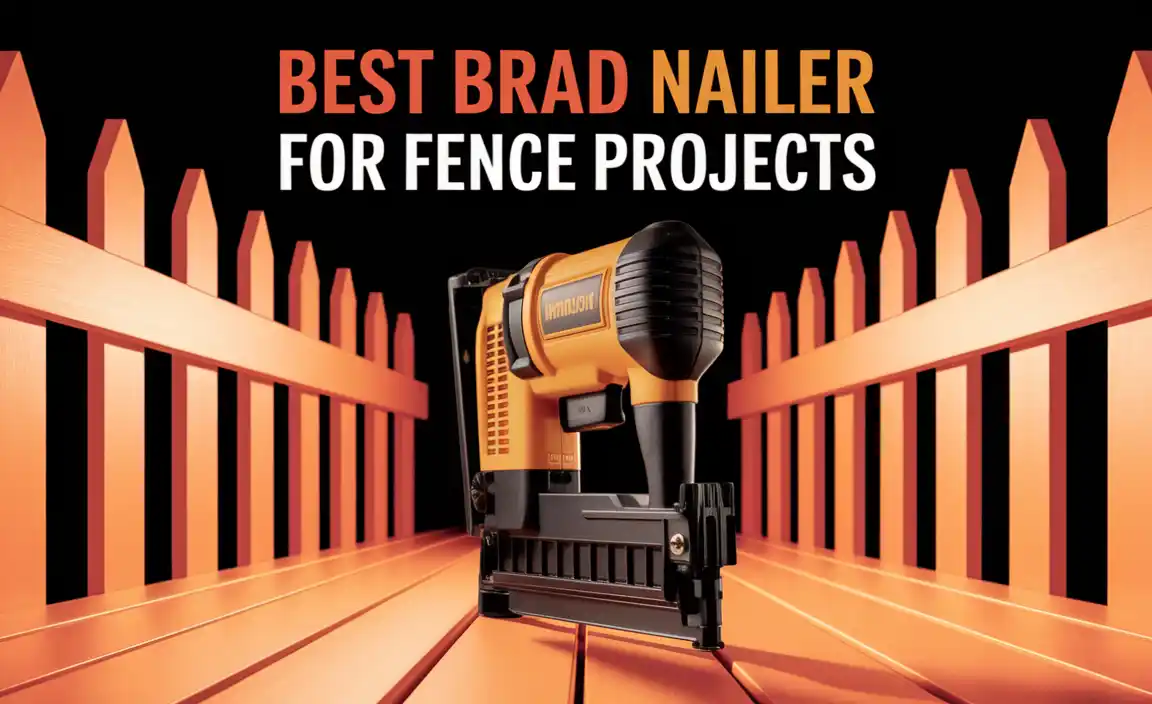
A wobbly fence can be a real bother. Loose boards, sagging sections, or even a complete break – it’s a common sight in many yards. But before you get overwhelmed thinking about expensive repairs or complicated carpentry, know this: fixing your fence can be surprisingly straightforward, especially with the right tools. And when it comes to speed and efficiency, a nailer is your best friend for fence repair. This guide will walk you through everything you need to know. We’ll cover choosing the right nailer, safe operation, and how to get those fence boards back in place like a pro. Get ready to tackle that fence with confidence!
Table of Contents
Why Use a Nailer for Fence Repair?
Let’s be honest, hammering nails one by one can be slow and, frankly, tiring, especially when you’re trying to make multiple repairs. That’s where a nailer shines. It drives nails quickly and consistently, making repairs faster and often more secure. You’re not just saving time; you’re getting a more professional-looking finish too. Think of it as upgrading from a hand saw to a power saw for a big project – the difference in efficiency is huge.
For fence repair, a nailer is particularly useful because:
- Speed: You can drive dozens of nails in the time it would take to hammer a few by hand.
- Consistency: Nailers drive nails to a consistent depth, which is crucial for a strong bond and a neat appearance.
- Reduced Fatigue: Less pounding means less strain on your arms and wrists.
- One-Handed Operation: Many nailers allow you to hold the material in place with one hand and operate the tool with the other, making it easier to work alone.
Choosing the Right Nailer for Your Fence Project
Not all nailers are created equal, and the best one for your fence repair depends on a few factors. We’ll break down the most common types you’ll encounter.
Types of Nailers for Fence Repair
The primary nailer you’ll likely use for fence repair is a framing nailer. However, depending on the specific repair and your existing tools, a construction or even a roofing nailer might also be considered. Let’s look at the most suitable options:
1. Framing Nailer
This is the workhorse for most fence repairs. Framing nailers are designed to drive larger nails quickly and powerfully, perfect for attaching fence boards to posts or pickets to rails. They are robust and can handle the demands of outdoor construction and repair.
Pros:
- Drives large nails effectively.
- Very fast operation.
- Ideal for structural connections.
Cons:
- Can be heavy and bulky.
- Requires a compressor (for pneumatic models) or a large battery.
- May require learning to control depth for different wood types.
2. Construction (or Utility) Nailer
These are versatile nailers often used in various construction tasks. They can handle a range of nail sizes and are a good option if you plan to do other DIY projects around the house. Some construction nailers can also be used for lighter framing jobs. They usually drive slightly smaller nails than a dedicated framing nailer.
Pros:
- Versatile for multiple tasks.
- Can be more maneuverable than heavy-duty framing nailers.
Cons:
- May lack the sheer power for very heavy-duty fence repairs.
- Nail capacity might be lower.
3. Roofing Nailer (Less Common for General Fence Repair)
While primarily designed for shingles, some roofing nailers can be adapted for specific fence repair tasks, especially if you’re reattaching thin capping or weatherboards. They typically drive short, wide-headed nails. This is usually a last resort for general fence repairs.
Pros:
- Good for attaching thin materials.
Cons:
- Very limited nail size.
- Not suitable for structural components.
- Primarily intended for different applications.
Corded vs. Cordless vs. Pneumatic Nailers
Once you’ve decided on the type of nailer, you’ll need to consider its power source:
- Pneumatic Nailers: These are the classic choice. They’re powered by compressed air from an air compressor.
- Pros: Generally lighter tool weight, reliable, and often less expensive for the tool itself.
- Cons: Requires an air compressor, air hose, and potentially an air filter/water separator, adding to the setup cost and complexity.
- Cordless (Battery-Powered) Nailers: These are powered by rechargeable batteries. They offer great portability and ease of use.
- Pros: No hoses or compressors needed, very portable, easy to set up and use anywhere. Excellent for fence repair outdoors.
- Cons: Can be heavier due to the battery, battery life can be a limitation for very long projects, initial tool cost is often higher.
- Electric (Corded) Nailers: These plug directly into a wall outlet. They are best suited for indoor or nearby outdoor projects where power is readily available.
- Pros: No batteries to charge, generally lighter than cordless models, less expensive than high-end cordless.
- Cons: Limited by power cord reach, not ideal for large outdoor areas like fences.
For fence repair, a cordless framing nailer is often the most convenient and practical choice due to the freedom of movement it provides around your yard.
Essential Tools and Materials for Fence Repair with a Nailer
Before you even pick up the nailer, gather everything you’ll need. Being prepared makes the process smoother and safer.
What You’ll Need:
- Your Chosen Nailer: (Framing or Construction)
- Air Compressor and Hose (if using pneumatic): Ensure it’s powerful enough for your nailer.
- Nails: This is crucial! Use nails specifically designed for your nailer and the type of wood you’re working with. For fence repair, galvanized or stainless steel nails are a must to prevent rust and staining. Common sizes for fence boards are 2-inch or 2.5-inch. Refer to your fence board and post type for the best size. You can find helpful information on fastener selection from resources like the WoodSource Fastener Guide.
- Safety Gear:
- Safety Glasses: Non-negotiable. Always protect your eyes from flying debris or misfired nails.
- Work Gloves: Protect your hands.
- Hearing Protection: Nailers can be loud, especially pneumatic ones.
- Steel-toed Boots: Recommended for general safety when working with tools and lumber.
- Measuring Tape: For accurate placement.
- Pencil: For marking.
- Level: To ensure boards are straight.
- Hammer: For setting any nails that don’t drive fully or for minor adjustments.
- Pry Bar or Crowbar: For removing old, damaged wood.
- Saw (Hand or Circular): To cut replacement boards to size.
- Replacement Fence Boards/Posts: Ensure they match your existing fence for a cohesive look.
- Wood Screws (Optional but Recommended): For extra holding power, especially on critical connections, some people prefer to use specific structural screws after nailing.
- Sander or Sandpaper: To smooth rough edges on new wood.
Step-by-Step: How to Use a Nailer for Fence Repair
Now for the main event! Let’s get your fence fixed. Remember, safety first, always.
Step 1: Assess the Damage and Prepare the Area
Walk along your fence line and identify all the areas needing repair. Look for:
- Loose or broken fence boards.
- Rotary that has caused boards to sag or detach.
- Damaged posts.
- Loose pickets.
Once identified, clear the area around the damage. Remove any debris, overgrown plants, or obstacles that might get in your way. If you need to replace a board, carefully remove the old one using a pry bar and hammer. Pull out any old nails or screws.
Step 2: Prepare Replacement Materials
Measure the dimensions of the damaged section or the boards you need to replace. Cut your new fence boards or posts to the correct size using your saw. If you’re attaching new pickets, ensure they are the same width and height as the existing ones. Sand down any rough edges on the new wood for a cleaner finish and to prevent splinters.
Step 3: Set Up Your Nailer
This step varies depending on your nailer type:
For Pneumatic Nailers:
- Connect your air hose to the compressor and the nailer.
- Turn on the compressor and let it build pressure. Check your nailer’s manual for the recommended operating pressure (PSI – pounds per square inch). This is critical for proper function and safety. Too low and the nail won’t drive; too high and you risk damaging the wood or over-penetrating.
- Load the correct size and type of nails into the nailer’s magazine. Make sure they are seated correctly.
For Cordless Nailers:
- Ensure the battery is fully charged and properly inserted into the tool.
- Load the correct size and type of nails into the magazine.
For Corded Electric Nailers:
- Plug the nailer into a GFCI-protected outlet.
- Load the nails into the magazine.
Step 4: Practice Fire (Important!)
Before you fire into your fence, find a scrap piece of wood that’s similar to what your fence is made of. Practice driving a few nails into it. This helps you:
- Get a feel for the nailer’s recoil.
- Check the nail depth. Most nailers have an adjustment to control how deep the nail is driven. You want the nail head to be slightly countersunk (just below the wood surface) or flush, not sticking out or buried too deep.
- Ensure the nailer is working correctly.
Step 5: Position and Fire
This is where the real repair happens. Here’s how to do it safely and effectively:
- Position the Board: Place your new or repaired fence board or picket exactly where it needs to be. You might need clamps to hold it firmly in place, especially if you’re working alone.
- Place the Nailer: Hold the nose of the nailer firmly against the wood where you want to drive the nail. Ensure the “safety contact tip” (the metal piece at the nose of the gun) is pressed against the wood surface. This is a safety feature; the nailer won’t fire unless this is engaged.
- Fire the Nail:
- Sequential Trip (Preferred for precision): You usually push the nailer nose against the wood, then pull the trigger. This fires one nail each time you fully depress the trigger and contact tip.
- Contact Trip (Faster but less precise): You hold the trigger down and “bump” the contact tip against the wood. Each bump drives a nail. This is faster but less accurate and can lead to accidental nail placement if you’re not careful. For fence repair, sequential trip is usually safer for beginners.
- Drive Multiple Nails: Drive the required number of nails to securely fasten the board or picket. For fence boards, you’ll typically put nails into the support rails or posts from both sides of the board. For pickets, you might use two nails at the top and two at the bottom, attaching them to the horizontal rails.
- Maintain Proper Angle: Try to drive nails straight into the wood for maximum holding power. Avoid driving nails at a sharp angle.
Step 6: Check Your Work and Clean Up
Once you’ve finished driving nails, inspect the repaired area. Ensure all boards are securely fastened and look straight. Check if any nails are sticking out or are too deep. If a nail isn’t fully driven, use a hammer and a nail set to finish it. If a nail has gone too deep, you might have to remove it and try again, or consider a wood screw for extra strength.
For pneumatic nailers, disconnect the air hose from the compressor and then from the nailer. Release any residual air pressure. Store your nailer and other tools properly. Clean up the work area, disposing of any scrap wood and debris.
Tips for a Pro-Level Fence Repair
Want to make your repairs look like they were done by a seasoned pro? Here are some extra tips:
- Match Existing Nails/Screws: If your fence uses screws, consider using screws for repairs. If it uses nails, stick to nails. Using a mix can sometimes look messy.
- Use Galvanized or Stainless Steel: As mentioned, this is vital for outdoor use to prevent corrosion, which can stain your fence and weaken the connection. If you’re unsure about what to use, local hardware stores or lumber yards can offer advice.
- Pre-drill for Larger Nails/Rotten Wood: If you’re driving a larger nail or working with wood that’s a bit soft or rotten, pre-drilling a pilot hole can prevent the wood from splitting and ensure the nail goes in straight.
- Stagger Nail Placement: When attaching a board to multiple rails or posts, stagger your nail placement slightly rather than driving them all in a straight line. This provides better holding power and reduces the chance of splitting the wood.
- Consider Wood Glue: For extra holding power, especially on critical joints or if you’re attaching a new board to an existing, older one, apply a bead of exterior-grade wood glue before nailing.
- Don’t Over-Nail: While you want a secure repair, too many nails can split the wood or make the repair look cluttered. Stick to what’s necessary for a strong connection.
- Safety First, Always: Reiterate the importance of safety gear. It’s easy to get caught up in the work, but your eyes and ears are precious!
Common Fence Repair Scenarios and Nailer Use
Let’s look at a couple of typical fence repair jobs and how a nailer makes them easier.
Scenario 1: Replacing a Damaged Fence Board
Problem: A single fence board is split or rotten.
Nailer Solution:
- Remove the old board and any remaining nails.
- Cut a new board to size.
- Position the new board.
- Use your nailer to attach it to the horizontal rails or vertical supports. Typically, 2-3 nails into each rail or post will suffice for a single board.
Scenario 2: Reattaching a Loose Picket
Problem: A single fence picket has come loose from the rails.
Nailer Solution:
- Reposition the picket against the rails.
- Using your nailer, drive 1-2 nails through the picket into the rail at the top, and another 1-2 nails into the rail at the bottom. Ensure the nails are long enough to securely anchor in both the picket and the rail.
Scenario 3: Repairing a Sagging Section (Multiple Boards)
Problem: A few fence boards have pulled away from the posts, causing the section to sag.
Nailer Solution:
- Assess if the rails holding the boards are damaged or just loose.
- If the rails are sound, reposition the boards.
- Use your nailer to drive nails through the boards into the posts or any sturdier framing members. You might need to temporarily support the sagging section to get it back into place before nailing.
- If rails are damaged, they’ll need replacement, which is a more involved repair but still made easier with a nailer for reattaching new rails and boards.
Troubleshooting Common Nailer Issues