Quick Summary:
For upholstery pros, selecting the right nail gun is crucial for efficiency and a polished finish. Top pneumatic and electric models offer power, precision, and ease of use, making furniture upholstery faster and more professional. This guide helps you choose the best nail gun for your upholstery needs.
Hey folks, Jack Shaffer here, your guide from Nailerguy! Ever looked at a beautifully upholstered piece of furniture and wondered how they got those fabric edges so perfectly smooth and secure? Often, the secret weapon is the right nail gun. Trying to staple by hand can be a real workout and often leads to uneven results. That’s where a good nail gun saves the day. It makes the job quicker, cleaner, and much more satisfying. We’re going to dive into what makes a nail gun great for upholstery and help you find the perfect one for your projects. Let’s get those fabrics looking professional!
Table of Contents
Why Upholstery Demands a Specific Nail Gun
Upholstery isn’t just about stretching fabric; it’s about precision, durability, and a flawless look. When you’re working with delicate fabrics, strong frames, and tight curves, the tool you use matters more than you might think. Hand stapling can lead to sore hands, inconsistent fastening, and even damage to the fabric or frame. This is where specialized nail guns shine. They deliver a consistent, controlled burst of power, sinking fasteners precisely where you want them without damaging the material.
The right nail gun offers several key benefits for upholstery professionals:
- Speed and Efficiency: Significantly faster than manual stapling, allowing you to complete projects in less time.
- Consistent Results: Delivers uniform fastening depth for a professional, clean finish every time.
- Reduced Fatigue: Takes the strain off your hands and wrists, making long upholstery jobs more manageable.
- Material Protection: With the right settings, it minimizes the risk of tearing delicate fabrics or damaging wood frames.
- Versatility: Capable of handling a wide range of fabrics and project types, from delicate cushions to sturdy outdoor furniture.
Understanding Nail Gun Types for Upholstery
Not all nail guns are created equal, especially when it comes to the specific demands of upholstery. For this craft, we generally focus on two main categories: pneumatic (air-powered) and electric. Each has its strengths, and the best choice often depends on your workspace, frequency of use, and budget.
Pneumatic Nail Guns (Air-Powered)
Pneumatic nail guns are the workhorses of many professional workshops. They rely on compressed air from an air compressor to drive fasteners. They are known for their power, speed, and lighter weight compared to some electric models.
Pros of Pneumatic Nail Guns:
- Power: Excellent power for driving fasteners securely, even into dense woods.
- Speed: Can fire nails very rapidly, ideal for production work.
- Lightweight: Once connected to the air hose, the gun itself is often lighter than electric alternatives, reducing user fatigue.
- Reliability: Generally very durable and long-lasting with proper maintenance.
- Cost-Effective: The initial tool cost can be lower than high-end electric models, though you need to factor in the compressor.
Cons of Pneumatic Nail Guns:
- Requires an Air Compressor: The biggest drawback is the need for a compressor, which adds to the initial cost, takes up space, and generates noise.
- Hose Management: You need to manage an air hose, which can get tangled or be a tripping hazard.
- Noise: Air compressors can be quite loud.
- Air Leaks: Hoses and fittings can develop leaks over time, reducing efficiency.
Electric Nail Guns
Electric nail guns have come a long way. They are powered by either a cord plugged into an outlet or a battery. For upholstery, you’ll mostly encounter electric staplers or brad nailers that can be adapted.
Pros of Electric Nail Guns:
- Portability: Cordless models offer excellent freedom of movement. No air compressor or hose needed!
- Ease of Use: Many are designed for simplicity and can be plugged in and used immediately.
- Quieter Operation: Generally much quieter than pneumatic tools, especially cordless models.
- No Compressor Needed: Eliminates the need for an air compressor, saving space and reducing setup time.
Cons of Electric Nail Guns:
- Power Limitations: Some electric models, especially those not designed for heavy-duty use, might lack the power for very dense materials.
- Battery Dependency (Cordless): You need to keep batteries charged, and run time can be a limitation for continuous work.
- Weight: Cordless models can be heavier due to the battery pack.
- Initial Cost: High-quality cordless tools can have a higher upfront cost.
Key Features to Look for in Upholstery Nail Guns
When you’re shopping for the best nail gun for your upholstery projects, several features will make your life easier and your work look better. Think about the specific demands of upholstery: working with different fabric thicknesses, reaching into tight corners, and ensuring a clean, professional finish.
1. Fastener Type and Size
For upholstery, you’ll primarily be using staples or very fine brad nails. Understanding what your gun uses is key. Some dedicated upholstery staplers use T50 staples or similar. Others might use fine wire staples for very delicate work. If opting for a brad nailer, look for models that accept thin, short brads (like 20-gauge or 22-gauge) which are less likely to split wood or damage fabric.
A critical aspect is the nail or staple length. For most upholstery, lengths between 1/2 inch to 1 inch are common. You need enough length to secure the fabric to the frame, but not so much that it pokes through or splits the wood.
2. Depth Adjustment
This is a non-negotiable feature for upholstery. You need precise control over how deep the fastener is driven. Too shallow, and the fabric won’t be secure. Too deep, and you risk damaging the fabric, splintering the wood, or having the fastener head show through delicate materials. A tool with an easy-to-use, fine-tuned depth adjustment dial is essential.
3. Sequential vs. Contact Actuation (Trigger Modes)
Nail guns typically have two trigger modes:
- Sequential Actuation: You must first press the safety contact tip firmly against the surface, then pull the trigger. This is safer and provides more control, ideal for precision work.
- Contact Actuation ( or Rapid Fire): You can hold the trigger down and simply bump the safety tip against the surface to fire nails. This is faster for covering large areas but can lead to accidental firing if not handled carefully.
For upholstery, the ability to switch between these modes or at least use a precise sequential mode is highly beneficial. Some prefer the control of sequential for detailed work, while others might use contact mode for quickly tacking down large sections of fabric.
4. Ergonomics and Weight
You’ll be holding this tool for extended periods, often in awkward positions. A comfortable grip, balanced weight distribution, and a tool that isn’t overly heavy will prevent fatigue and allow for more precise control. Look for rubberized grips and designs that feel balanced in your hand.
5. Jam Clearing Mechanism
Nails and staples can jam. A tool with an easy, tool-less jam clearing mechanism will save you a lot of frustration and downtime. You want to be able to quickly clear a jam and get back to work.
6. Air Fittings (for Pneumatic)
If you’re going pneumatic, check the type of air fitting. Most common are 1/4-inch NPT. Ensure it’s compatible with your existing air compressor setup or that you have the necessary adapters.
7. Corded vs. Cordless (for Electric)
Cordless electric nailers offer unmatched portability. Consider battery voltage (V) and amp-hour (Ah) ratings – higher numbers generally mean more power and longer run time. If you already own tools from a specific battery platform (like DeWalt, Makita, Ryobi), sticking with that brand can save you money on batteries and chargers.
Top Nail Guns & Staplers for Furniture Upholstery Professionals
After considering the features, let’s look at some categories of tools that excel in upholstery. While there isn’t one single “best” gun for everyone, these types consistently perform well. Keep in mind that model numbers change, so these represent types of tools that have proven reliable.
1. Dedicated Pneumatic Upholstery Staplers
These are purpose-built for upholstery. They typically drive narrow crown staples which are excellent for holding fabric securely without being overly conspicuous. They are favored by many seasoned pros for their power and efficiency.
- Key Features to look for:
- Drives narrow crown staples (e.g., 1/4″ crown width)
- Adjustable depth control
- Lightweight design
- Rear exhaust to keep dust away from your work area
- Ergonomic grip
- Example Staple Sizes: 1/2″, 9/16″, 5/8″, 3/4″, 7/8″
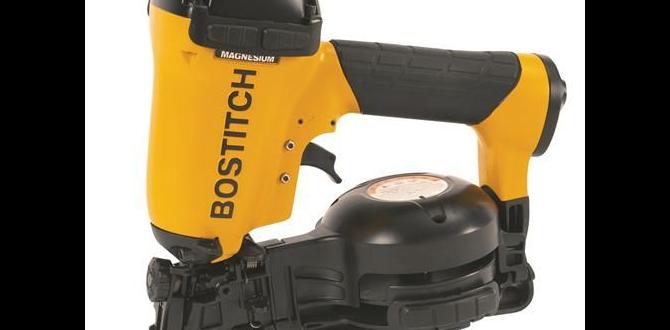
A well-regarded example in this category might be a tool similar to the BOSTITCH SX5000 or a similar model that offers the right staple size and power. Always check the specific staple gauge and crown width for your fabrics.
2. Electric Staple Guns (for lighter upholstery)
For lighter upholstery jobs, DIY projects, or when portability is a top priority, a good electric staple gun can be an excellent choice. These are often more affordable and easier to use for beginners. Some can even accept T50 staples, which are very common.
- Key Features to look for:
- Accepts standard T50 or similar staples
- Some form of depth control (may be less precise than pneumatic)
- Comfortable grip
- Corded and cordless options are available
- Example Brands: Arrow, Stanley, WorkPro.
These are fantastic for recovering dining chair seats, tacking down backing fabric, or small decorative projects. For heavy-duty furniture frames, you might find them lacking in power.
3. Fine Wire Staplers (Pneumatic & Electric)
For very delicate fabrics where you want the fastener to be as inconspicuous as possible, fine wire staplers are the way to go. These drive thin staples with a very narrow crown, making them ideal for silks, velvets, or intricate trim work.
- Key Features to look for:
- Drives fine wire staples (e.g., 22-gauge staple)
- Narrow crown (often 3/16″ to 1/4″)
- Excellent depth control is paramount
- Especially useful on delicate materials
- Consider: Some brands offer specialized narrow crown staplers that can handle these fine staples.
These tools require a bit more finesse and are often used by trimmers specializing in high-end or antique furniture restoration. Precision is key, so look for tools with very fine depth adjustment.
4. Brad Nailers (if using very fine brads)
While technically not staple guns, some upholstery jobs can benefit from very fine gauge brad nailers (e.g., 23-gauge or even 22-gauge). These drive tiny headless or minimal-head brads that are almost invisible. They are best used to tack down edges under the main fabric, secure very thin trim, or for specific craft applications.
- Key Features to look for:
- Drives 23-gauge or finer brads
- Lightweight and easy to maneuver
- Precise depth control
- Often used in conjunction with staples for hybrid fastening
- Consider: Ensure the brad head is small enough not to show through your fabric.
These are more niche for upholstery but can be incredibly useful for specific detailed tasks. Always choose brads that match the wood density and fabric type.
Setting Up and Using Your Upholstery Nail Gun Safely
Safety is always job number one, especially when working with power tools that drive fasteners at high speeds. Even though upholstery tools are generally less powerful than framing nailers, proper safety precautions are essential.
Here’s a simple safety checklist:
- Read Your Manual: Every tool is different. Always read and understand the manufacturer’s instructions for your specific nail gun.
- Wear Safety Glasses: This is non-negotiable. Fasteners can ricochet, especially if they hit a knot in the wood or a metal object within the frame. Always wear ANSI-approved safety glasses.
- Secure Your Workpiece: Make sure the fabric and frame are stable. If you’re working on a complex piece, consider clamping it down.
- Keep Fingers Clear: Never place your fingers near the firing mechanism or the area where the fastener will be driven.
- Use the Right Fasteners: Always use the size and type of staple or nail recommended by the tool manufacturer. Using the wrong ones can cause jams or damage.
- Maintain a Stable Stance: Ensure you have good footing and balance when operating the tool, especially when working at awkward angles.
- Disconnect Power When Not In Use: For pneumatic tools, disconnect the air hose. For electric tools, unplug them or remove the battery when changing staples, clearing jams, or performing maintenance.
- Don’t Point the Tool at Anyone: Treat every tool like it’s loaded.
Following these simple steps will help prevent injuries and ensure you have a positive experience with your nail gun.
Maintenance for Longevity
To get the most out of your nail gun and keep it performing reliably, a little regular maintenance goes a long way. This is especially true for pneumatic tools.
Pneumatic Nail Gun Maintenance:
- Lubrication: Most pneumatic tools require a few drops of specialized pneumatic tool oil in the air inlet before each use. Refer to your manual for the exact procedure.
- Drain Air Compressor: Regularly drain water from your air compressor tank. Moisture can damage the tool’s internal components and cause rust.
- Check Hoses and Fittings: Inspect air hoses for cracks or leaks and ensure all fittings are secure.
- Keep it Clean: Brush away dust and debris from the tool’s exterior.
Electric Nail Gun Maintenance:
- Keep it Clean: Similar to pneumatic tools, keep the exterior clean.
- Battery Care: For cordless models, follow the manufacturer’s instructions for battery charging and storage to maximize battery life. Store batteries in a cool, dry place.
- Check Magazine: Ensure the staple or nail magazine is clean and free of debris that could cause jams.
- Inspect for Damage: Periodically check the tool for any signs of physical damage.
Consistent maintenance ensures your tool performs at its best, making your upholstery projects more efficient and professional. For more in-depth information on tool care, you can often find resources on reputable woodworking sites or manufacturer support pages, like those provided by the Occupational Safety and Health Administration (OSHA) regarding power tool safety and maintenance standards.
Frequently Asked Questions (FAQs)
Q1: What is the best type of nail gun for upholstery?
For professional upholstery, pneumatic narrow crown staplers are generally preferred for their power, speed, and consistent results. However, high-quality cordless electric staplers are excellent alternatives for portability and ease of use, especially for lighter tasks.
Q2: Can I use a regular staple gun or a brad nailer for upholstery?
A manual staple gun can work for very small, simple projects but is inefficient and can cause fatigue for larger jobs. A brad nailer is typically not ideal as brads are often too small and lack the holding power, though very fine gauge brad nailers can serve niche fastening needs for trim or edge security.
Q3: What size staples or nails should I use for upholstery?
For upholstery, narrow crown staples in lengths ranging from 1/2 inch to 1 inch are common. The exact size depends on the fabric thickness and the wood density of the frame. Fine wire staples or 23-gauge brads are used for very delicate materials.